Short answer: ask five questions, choose one ordering pattern and put one person in charge of the final order. For many groups, the easiest pattern is a shared base—such as pizza or barbecue—plus individual burgers, salads or sides for people who want their own plate. Check the live menu and confirm anything time-sensitive or stock-dependent before travelling.
Start with five questions, not twenty menu screenshots
Group dining becomes difficult when everybody suggests a restaurant before anybody explains what they need. A better plan is to collect the constraints first. Ask these five questions in the group chat:
- How many people are definitely eating? Count confirmed diners rather than everybody who might appear later.
- Is everyone hungry for a full meal? A table of full-meal appetites needs a different order from friends who have already sampled snacks.
- Who wants to share? Some people love a shared pizza or barbecue order; others would rather choose one burger or salad for themselves.
- Does anyone have a dietary restriction or allergy question? Ask the restaurant directly before ordering. A menu label alone cannot answer every ingredient or cross-contact question.
- What time does the group need to eat? This matters when someone is arriving from an activity, carrying bags or working with a bus schedule.
Once those answers are visible, stop collecting new restaurant ideas. Choose a workable format, select the food and let one person place the final order. That small change prevents duplicate items, missed requests and the familiar moment when eight people are still deciding while everybody gets hungrier.
Choose one of three ordering patterns
1. One shared order
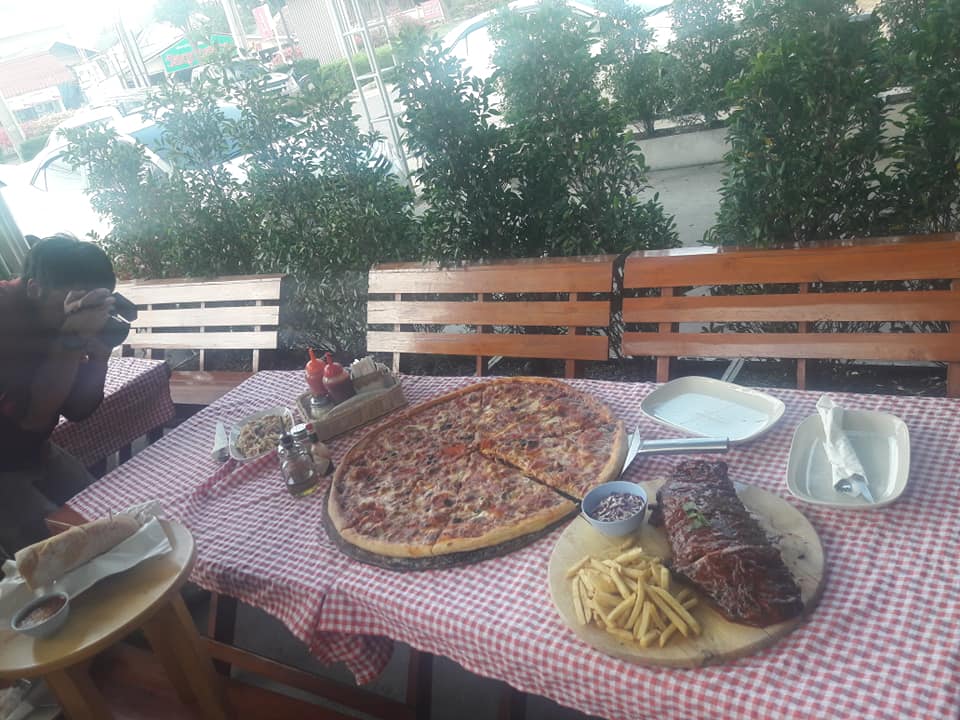
This is the cleanest format when the group agrees on flavors and is comfortable sharing. Pizza is easy to place at the center of the table, while barbecue, appetizers and sides can create variety around it. The important step is confirming preferences before the order is placed—not negotiating every bite after the food arrives.
2. A shared base with individual add-ons
This is often the most flexible option. Start with one shared category, then let people add a burger, salad or side when they want a separate plate. It reduces the number of group decisions without forcing everybody into the same meal. It also helps when some diners want a substantial main while others want only part of the shared order.
3. Individual mains for everyone
Choose this when the group has very different preferences or does not want to divide food. Burgers and other individual dishes make the ownership of each order obvious. One person should still collect the full list and repeat it back before placing it, especially when several items sound similar.
Pizza makes sharing easy—but size still needs thought
Do not choose a pizza by diameter alone. The amount of pizza grows with the area of the circle, so a 20-inch pizza has four times the surface area of a 10-inch pizza. Our pizza-size guide compares Rose's listed 10, 14, 16, 20 and 25-inch sizes without pretending that one size always feeds a fixed number of people.
Start with the number of flavors the table wants. One larger pizza keeps the order simple when everybody agrees. Two or more pizzas make more sense when the group wants different toppings or wants to keep one choice simpler than the others. Then decide whether pizza is the whole meal or just one part of an order that also includes burgers, barbecue, starters or salads.
Three ways to build the table
| Table plan | Why it works | What to confirm |
|---|---|---|
| Pizza + burgers | A shared centerpiece with clear individual choices | Pizza flavor, size and each burger order |
| Pizza + barbecue | Two share-friendly categories with different textures | Current barbecue availability and pizza timing |
| Burgers + starters | Individual mains with a few shared extras | Each main, side choices and shared quantities |
These are decision formats, not serving promises. Appetite, side choices and how much food people have already eaten vary too much for a universal formula. Use the pizza, burger and barbecue sections of the live menu to compare the current options and prices.
Handle dietary and allergy questions directly
A group planner should never guess for somebody else. Ask the diner to identify what they need, then contact the restaurant with the exact ingredient or cross-contact question. Recipes, sauces and kitchen conditions matter, and a broad description such as “meat-free” does not automatically answer an allergy question.
If the restaurant cannot give the assurance a diner needs, treat that as useful information and choose a safer option. The goal is not to force every person into the same shared dish. It is to make sure every confirmed diner has a workable plan before the group arrives.
Plan around the evening you actually want
Groups often combine dinner with Pai Walking Street or another stop in town. The Tourism Authority of Thailand's Mae Hong Son guide describes Walking Street in downtown Pai with street food, drinks and local goods. Its Pai in the Rain article describes Pai as a mountain community in Mae Hong Son Province. Both official articles were published in 2020, so use them for general destination context and check locally for current conditions, vendors and operating times.
Before the group starts walking, decide whether snacks are dinner, a starter or the after-dinner activity. Our Walking Street food guide gives the decision a simple structure. Making that choice early prevents half the group from filling up while the other half is waiting for a full meal.
Use a two-minute final check
One person should read the order back in a consistent sequence:
- Shared pizzas, barbecue and starters.
- Individual mains and any side choices.
- Dietary questions that still need a direct answer.
- Items that depend on notice or current stock.
- The planned arrival or collection time, if one has been confirmed directly.
Do not place the order while new requests are still arriving. Give the group a clear cutoff, repeat the final list and then contact the restaurant once. That is faster for the table and clearer for the kitchen.
Call ahead when one detail can make or break the plan
A short call is useful when the group wants one particular item or has a tight schedule. For Rose's Roadhouse, confirm the current details that matter to your group:
- whether a specific menu item is available now;
- whether smoked brisket is in stock;
- the current price and timing for the 25-inch giant pizza;
- any ingredient or allergy question that cannot be answered from the menu; and
- whether the group's planned timing is workable.
Calling does not replace reading the menu. It is the final verification step for the few details that can change or need a direct answer. Keep the question list short, have the order ready and note who received the answer so the group does not repeat the same call.
What not to do
- Do not promise a universal number of servings from a pizza diameter.
- Do not assume a stock-dependent item is available because it appeared in an older photo.
- Do not copy menu prices from a travel post when the restaurant has a live menu.
- Do not guess about allergies, ingredients or cross-contact.
- Do not let five people place separate versions of the same group order.
Ready to make the order simple?
Check the current menu, then call if your group needs a stock, timing or ingredient question answered.
Plan from the live menu